

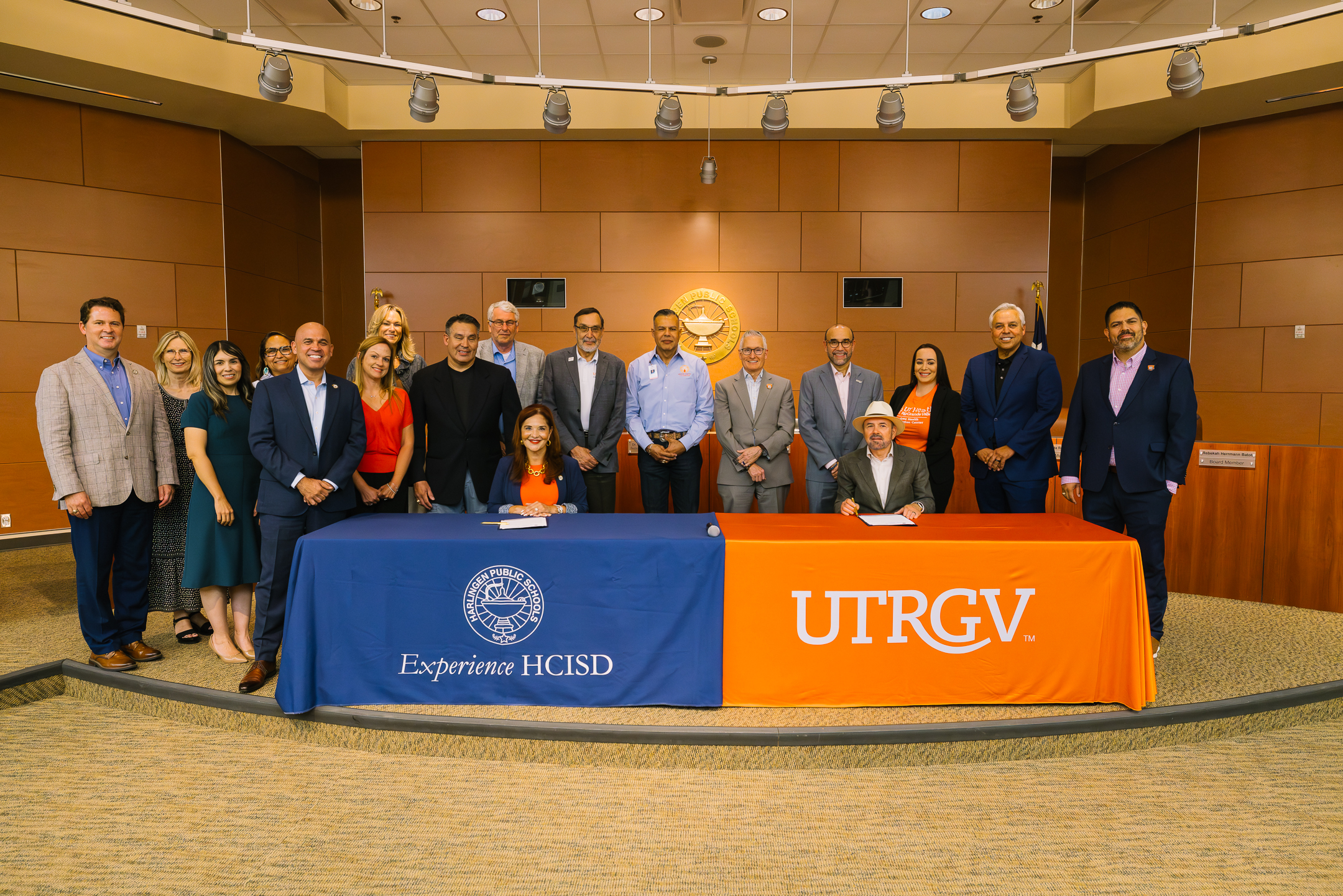
Confronted by a spike in early diabetes indicators among students, the Harlingen Consolidated Independent School District and The University of Texas Rio Grande Valley have launched a groundbreaking partnership: the “Living Longer by Design” initiative.
Launching for the 2026–2027 school year, this coordinated effort transforms public school campuses into a medical “prevention front door.” By directly embedding UTRGV’s clinical expertise, faculty, and student ambassadors into schools, the initiative aims to intercept childhood diabetes and protect at-risk children before the disease takes hold.
Recognizing the urgent need for a unified regional response, UTRGV President Guy Bailey emphasized the university’s deep commitment to local families.
“Through ‘Living Longer by Design,’ we are combining our institutional resources with HCISD’s close community ties to transform how we identify, support, and protect our children from preventable diseases like Type 2 diabetes,” Bailey said. “This is about creating a healthier, longer-lasting legacy for South Texas.”
Harlingen CISD Superintendent Dr. Veronica Kortan said the initiative reflects the district’s commitment to supporting the whole child by partnering with organizations that can make a lasting difference in students’ lives.
“In HCISD, our commitment to students extends beyond academics,” Kortan said. “This partnership allows us to use the strength of our schools, our family connections, and UTRGV’s clinical expertise to respond with care, urgency, and purpose. When we identify a child who may be at risk, we have a responsibility to do more than inform families. We must walk alongside them, connect them to support, and help create healthier futures for our children and our community.”
A ceremonial signing of a letter of intent to partner took place at the HCISD Transforming Learning Committee meeting on Tuesday, July 7.
DATA DRIVING THE INTERVENTION
The initiative responds directly to alarming data revealed during required state health screenings across HCISD.
- 2,000+ Students at Risk: More than 2,000 HCISD students currently show positive diabetes risk markers.
Historically, when a student was identified as at-risk during a routine school screening, families were primarily provided with an informational referral. “Living Longer by Design” replaces that with an active, continuous pipeline of medical and educational support. This shifts the region’s approach to pediatric health from simple awareness to immediate clinical intervention.
SHARED INFRASTRUCTURE FOR PREVENTION
To tackle these statistics head-on, the initiative bridges public education and higher education resources:
- HCISD provides the foundational “front door” by utilizing its existing campus health screening data and robust family engagement networks.
- UTRGV opens a direct pipeline to clinical and educational care, deploying College of Health Professions faculty, utilizing the university’s Center for Excellence in Diabetes and Obesity and sending student ambassadors directly onto school campuses to support families.
Dr. Michael Lehker, dean of the UTRGV College of Health Professions, said that this shared infrastructure creates a powerful blueprint for community health.
“By mobilizing our resources, we are removing traditional barriers to care and meeting families exactly where they are,” Lehker said. “This allows our College of Health Professions to turn screening data into immediate clinical action, equipping the next generation of healthcare providers with invaluable field experience while fundamentally changing the health trajectory of South Texas children.”
